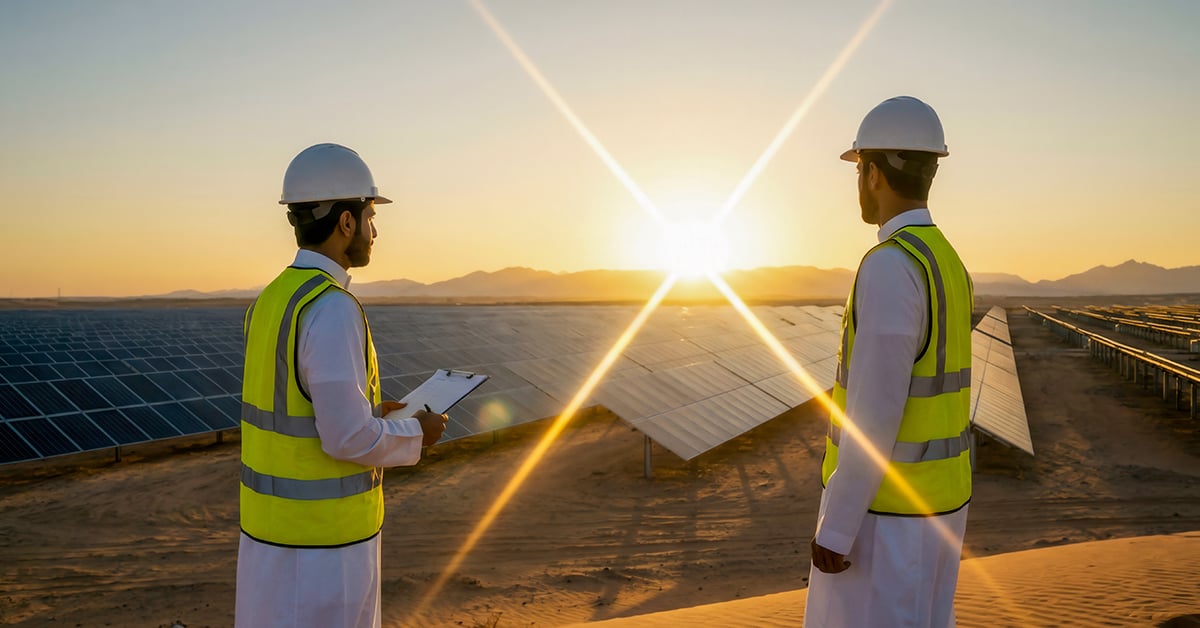
According to the International Energy Agency (IEA), energy demand across the Middle East continues to grow, alongside major investments in renewable capacity. Meanwhile, the World Bank highlights the growing importance of resilient, adaptable energy systems that are able to secure supply against climate and infrastructure challenges.
How can grid operators balance these objectives? The answer lies in digital tools that can maintain grid stability, while supporting rapid expansion.
What is a digital twin?
A digital twin is a virtual representation of a physical network that combines real-time operational data with simulation models. As outlined by IBM, digital twins integrate sensor data, historical records and operational systems to give a continuously updated view of assets and processes.
The concept evolved from the Digital Model, a static replica used for design and analysis, to the Digital Shadow, where automated data flows mirror the physical asset’s state in near‑real‑time but remain largely observational, and finally to the Digital Twin, a continuously synchronized, closed‑loop system that combines live telemetry, simulation and predictive analytics to enable forecasting, optimisation and operational decision‑making. In the energy sector, digital twins can extend traditional SCADA systems by adding simulation, forecasting and predictive capabilities. To this end, digital twins can help utilities improve efficiency, reduce downtime and enhance planning accuracy, according to McKinsey.
Crucially, the use of virtual twins in these operations can also shift operations from reactive to proactive. Operators can spot potential issues before they escalate. This is particularly valuable in the Middle East, where renewable energy is expanding at a rapid rate. Indeed, projects such as Dubai’s Mohammed bin Rashid Al Maktoum Solar Park are injecting gigawatts of solar power into the grid.
Managing variability in challenging conditions
However, solar generation is variable. Cloud cover, dust and sandstorms can all cause sudden fluctuations in power output, leading to unstable voltage and load flows. Fortunately, digital twins can help address these issues of variability by simulating weather scenarios. Operators can then predict the impact of these factors on power generation, allowing utilities to plan grid configurations in advance and maintain stability.
Energy demand in the Middle East also faces extreme peaks due to the region’s high summer temperatures, and the widespread use of air-conditioners. According to the IEA, electricity demand tripled in the period between 2000 and 2024, and cooling makes up half of peak electricity demand in the region and a quarter of annual electricity demand. This shows how demand patterns in the region are becoming more intense due, in part, to these factors.
By simulating peak-load scenarios, digital twins allow operators to identify bottlenecks before they occur and implement mitigation strategies, such as demand response or load shifting. Thanks to these measures, grids can continue to operate reliably even during periods of maximum stress.
Digital solutions for distributed networks
Another challenge lies in the Middle East’s geographically extensive networks. The region’s power grids often span remote desert regions, where detecting and resolving failures can be difficult and delayed.
According to the National Renewable Energy Laboratory, grid resilience is dependent on the ability to anticipate, withstand and recover from disruptions. In these cases, digital twins can provide a system-wide perspective with a full assent and operations health overview that enables operators to simulate outages, evaluate load flows and determine the fastest path to restoring service, thus improving response times.
Digital twins are also helping to make renewable integration more manageable. Simulating variable solar weather conditions allows operators to anticipate the effects, and plan reserve capacity accordingly. Digital twins also enable the virtual testing of large-scale solar installations before they connect to the grid, helping to identify potential constraints early in the planning process of large and costly projects.
Not only the size and scope of these projects present planning issues. This is also true for bidirectional power flows from new smart cities and microgrids. Digital twins provide the visibility needed to understand and manage these dynamics, helping simulate storage systems and demand response strategies. Furthermore, real-time insights enable faster reactions to sudden changes in generation or consumption.
Overcoming challenges of ageing and fragmented systems
The IEA’s Electricity 2026 report emphasises that flexibility and digitalization will be essential to integrating of renewable energy. The report states that modern power grids face a combination of technical challenges including ageing infrastructure, renewable variability and fragmented data systems.
Thankfully, digital twins can directly address these issues by enabling continuous real-time monitoring. Data can be compiled from multiple sources and, based on this, operators can apply predictive analytics to anticipate failures and proactively plan maintenance. The results? Faster and more informed operational decisions that help reduce downtime and extend the lifespan of critical assets. According to EPRI, digital twins can reduce 5-10% in disaster-related downtime.
Building the digital foundation
To deliver these benefits, digital twins rely on several technological foundations. Real-time data integration from operational technology is combined with smart software platforms such as COPA-DATA‘s zenon, which unify data, enable real-time monitoring and support simulation-based decision-making at scale.
Robust data governance is equally essential. This involves breaking down data silos between IT and OT systems and ensuring seamless integration across the grid. Utilities must ensure that data is consistent, standardized and validated, with clear ownership and traceability. Without high-quality data, the accuracy of simulations, and the value of insights generated by digital twins, can be significantly compromised. Once the digital twin is fully developed, it is deployed within the grid management system.
Cybersecurity is another critical consideration. As energy infrastructure becomes increasingly interconnected, protecting operational systems and ensuring secure data exchange is paramount. Digital twins can also be used to simulate potential cyberattack scenarios, helping utilities anticipate risks and plan effective responses.
In addition, digital twins offer substantial financial value. They help reduce operational expenditure while improving asset utilization. By enabling predictive maintenance and optimizing operations, they minimize costly outages and contribute to more reliable, efficient energy systems.
Resilient, future-proof energy infrastructure
The next phase of digital twin evolution will, unsurprisingly, be driven by the integration of artificial intelligence (AI) and machine learning. These technologies enable increasingly autonomous, self-optimizing grid operations. As energy systems become more complex and dynamic, the ability to respond in real-time will be critical to maintaining stability and efficiency.
But the core challenge remains the same: how can operators manage rapid transformation, rising demand and environmental stress while ensuring reliable power delivery? Digital twins offer a direct answer. By combining real-time data, predictive analytics and simulation, they allow operators to move from reactive management to proactive control, anticipating disruptions before they occur and adapting systems accordingly.
In a region where extreme conditions and rapid renewable expansion are redefining grid requirements, this capability is not just advantageous; it is essential. Digital twins provide the visibility, flexibility and intelligence needed to balance growth with resilience, ensuring that as the Middle East’s energy systems continue to evolve, this transformation remains both stable and sustainable while laying the groundwork for a smarter, greener and truly future-ready energy infrastructure.